
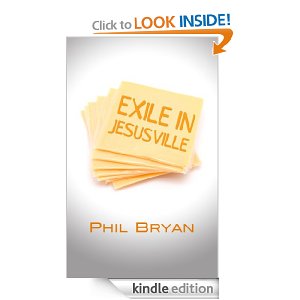
Right from the start, Phil gives the reader a fair warning by quoting Flannery O’Connor: “When you can assume that your audience holds the same beliefs you do, you can relax a little and use more normal means of talking to it; when you have to assume that it does not, then you have to make your vision apparent by shock— to the hard of hearing you shout, and for the almost-blind you draw large and startling figures.” For those that hold the same belief as Phil, like I often do even though we have our disagreements, much of what he says rings true. For those that don’t, much of this book may be filled with coarse language, obscene vulgarities and overall, according to our American Evangelical Christian standards, inappropriate language (to say it mildly).
But I invite you to read past the language and find the meaning and heartbreaking personal experiences behind the veil of well written prose. And well written it is. After all, Phil is an English literature major and the subtle hints to famous works are interspersed throughout the book. I especially loved a twist on Shakespeare’s Hamlet, but it’s for you to find that quote lest I spoil all the fun.
Obviously writing from the deepest crevices of his heart and sharing intimate details of his personal life, anyone disenfranchised with the commercial machine of American evangelicalism should be able to find him- or herself in many of the anecdotes. But what is more important than hanging out the dirt and sharing the ugly inner workings of the Churches Phil has been a part of, is the ultimate message that points us to what the Church of Jesus Christ is really about.
I won’t divulge too much lest I take away all your reading pleasure, but even for those not involved in professional ministry there are many lessons to be learned. We all love praise and we all fall in the trap of thinking we are better than we really are. We love “Building [our] identity on the praises of those around [us]“, until we realize it’s like “trying to live on a diet of only cotton candy“. Even in the non-clerical business world it’s amazing “what we can convince ourselves of when things are going well“. And we usually reap the consequence of such grandiose illusions. As did Phil.
It is only when we realize that we should substitute the fake processed sliced cheese for something as substantial and flavorful as true Gorgonzola (he omitted Pyrenees and Chaumes, but since he’s an American boy I will forgive him of this faux pas), that we start to realize that the American consumerism of the Evangelical Church is a poor substitute to the true Church.
This book is extremely well written, effortless to read and Phil has made it in a group of a very select few writers whose books I was able to finish in one sitting. Granted, it’s not a huge volume and time is therefore not necessarily an issue. Nonetheless, the language, although occasionally crass, is never boring. If you can get past the initial shock value of some of the language, I invite you to read the book and perhaps, just perhaps, you will the learn the same message as I came away with.
Because after all, as Phil’s dad once said:
“Churches are a mess, but they’re the best thing going”.